

Choosing between endless rows of skincare products can feel like guesswork when your skin needs a unique solution. Generic routines often fail because your concerns are as personal as your fingerprint, not something a one-size-fits-all product can address. Tailored skincare focuses on your individual needs and goals, cutting through common myths and offering dermatologist-backed, technology-driven routines designed to actually transform your skin’s health and vitality.
Table of Contents
- Tailored Skincare Defined And Common Myths
- What Tailored Skincare Actually Is
- Common Myths That Mislead You
- Why Personalization Changes Everything
- Types Of Personalization In Modern Skincare
- Basic Personalization By Skin Type
- Advanced Technology-Driven Personalization
- Device Personalization Through Technology
- How AI And Devices Create Custom Routines
- How AI Analyzes Your Skin
- Device Integration With AI Systems
- Creating Your Personalized Routine
- Clinically-Proven Outcomes And Efficacy
- Proven Results From Personalized Treatment
- Evidence-Based Active Ingredients
- Timeline To Visible Results
- Risks, Limitations, And What To Avoid
- Chemical Risks And Ingredient Safety
- Data Privacy And Ethical Concerns
- Limitations Of Personalization Technology
- What To Avoid In Your Routine
Key Takeaways
| Point | Details |
|---|---|
| Tailored Skincare is Unique | A personalized skincare routine addresses individual skin types and concerns, resulting in better outcomes compared to generic products. |
| Myths Can Mislead | Common misconceptions, such as oily skin not needing moisturizer or sunscreen being optional, can negatively impact your skincare efforts. |
| Advanced Technology Enhances Personalization | Utilizing AI-driven analyses and advanced technology allows for hyper-personalized skincare, optimizing products and treatments to meet specific biological needs. |
| Clinical Evidence Supports Customization | Studies show that tailored regimens lead to measurable improvements in skin health, significantly outperforming standardized skincare routines. |
Tailored Skincare Defined and Common Myths
Tailored skincare means creating a routine designed specifically for your skin type, concerns, and goals—not following generic advice that works for everyone else. Your skin is unique, and what works for your friend won't necessarily work for you.
The difference between tailored and one-size-fits-all skincare is significant. Off-the-shelf routines ignore your individual needs, whether you're dealing with sensitivity, dryness, acne, or aging concerns. Tailored skincare addresses what your skin actually needs, not what marketing tells you to buy.
Here's a clear comparison of tailored versus one-size-fits-all skincare approaches:
| Aspect | Tailored Skincare | One-Size-Fits-All |
|---|---|---|
| Product Selection | Based on individual skin needs | Same for all consumers |
| Results | More consistent and visible | Often unpredictable |
| Cost Efficiency | Minimizes wasted spending | Higher risk of buying ineffective items |
| Risk of Irritation | Lower, as ingredients are matched | Higher, due to generic formulas |
| Adaptability | Flexible as skin changes | Static and slow to evolve |
What Tailored Skincare Actually Is
Tailored skincare starts with understanding your specific skin profile. This includes your skin type, sensitivity level, environmental factors, and targeted concerns. A proper assessment looks beyond surface-level categorization.
Effective tailored routines consider:
- Your baseline skin condition (oily, dry, combination, or normal)
- Specific concerns you want to address (acne, aging, hyperpigmentation, barrier damage)
- Environmental and lifestyle factors affecting your skin
- Ingredient sensitivities or allergies
- Your skin's response to different treatment methods
Dermatologist-backed technology like LED phototherapy and microcurrent therapy can be personalized to your needs. These clinical-grade devices work best when matched to your skin's actual requirements, not guesses.
Personalized skincare combines clinical assessment with customized treatments—not random product selection.
Common Myths That Mislead You
One major myth: oily skin doesn't need moisturizer. This is false. Oily skin still requires hydration, just with lighter formulations. Skipping moisturizer often makes oily skin worse by triggering excess sebum production.
Another myth: sunscreen is optional on cloudy days. Reality check—UV rays penetrate clouds. Daily sunscreen is non-negotiable for everyone, regardless of weather.
The biggest myth of all: one product works for everyone. Skin varies dramatically between individuals. What clears your coworker's acne might irritate yours completely.
Other widespread misconceptions include:
- "More expensive products work better" (price ≠ efficacy)
- "Natural ingredients are always safer" (some natural ingredients cause irritation)
- "You need to strip your skin clean" (over-cleansing damages your barrier)
- "Results happen overnight" (real change takes 4-12 weeks of consistency)
Why Personalization Changes Everything
When your routine matches your skin's actual needs, you see measurable results. Personalized LED therapy targets specific concerns—acne reduction with blue light, collagen stimulation with red light. Generic routines can't adapt like this.
A quick skin assessment reveals what your routine actually needs. This diagnostic approach prevents wasted money on products that won't work for you and accelerates visible improvements in skin health.
Pro tip: Start with a professional skin assessment before buying any new products or devices—this single step eliminates 80% of skincare mistakes and saves you money long-term.
Types of Personalization in Modern Skincare
Skincare personalization has evolved far beyond picking a moisturizer for dry skin. Modern approaches use advanced technology to match treatments to your unique biology, lifestyle, and environment. This precision targeting delivers results that generic routines simply cannot achieve.
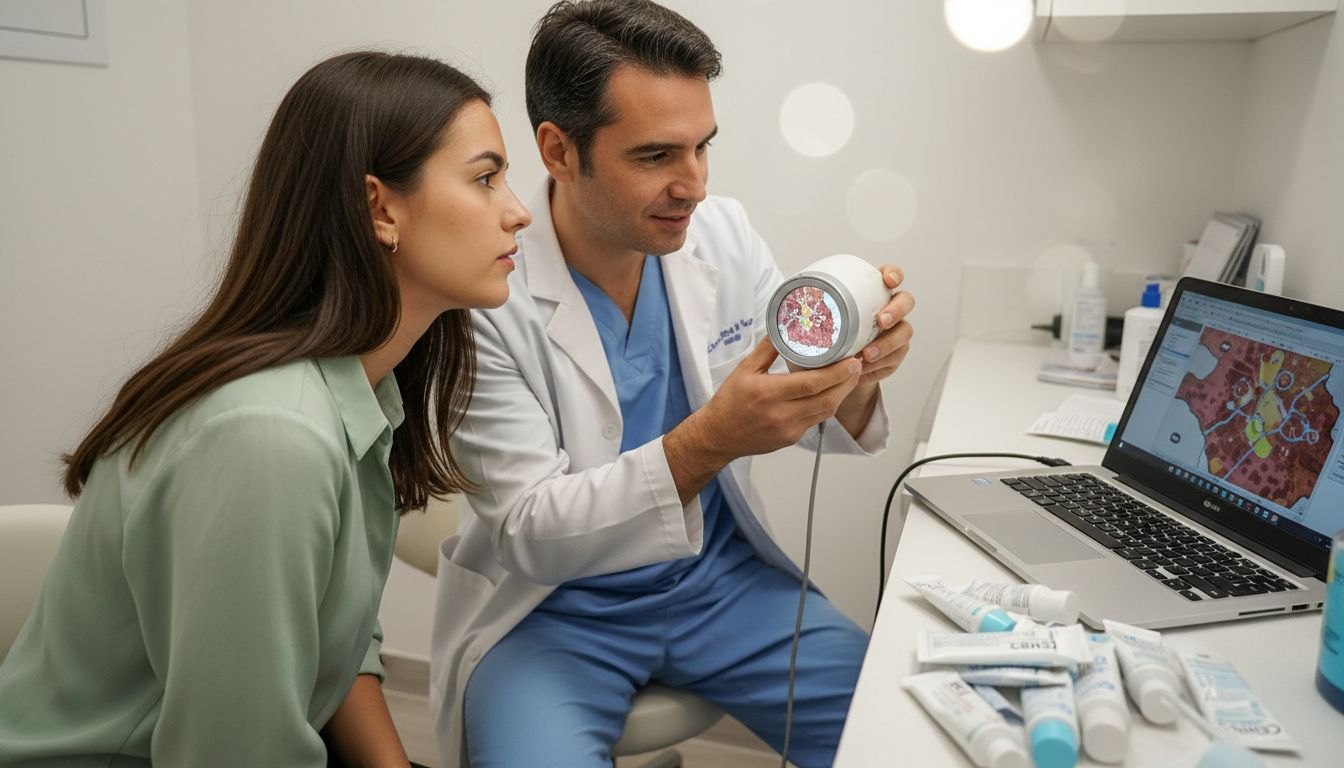
Personalization today operates at multiple levels—from basic skin type matching to sophisticated AI-driven formulations. Each approach offers different benefits depending on how deeply you want to customize your routine.
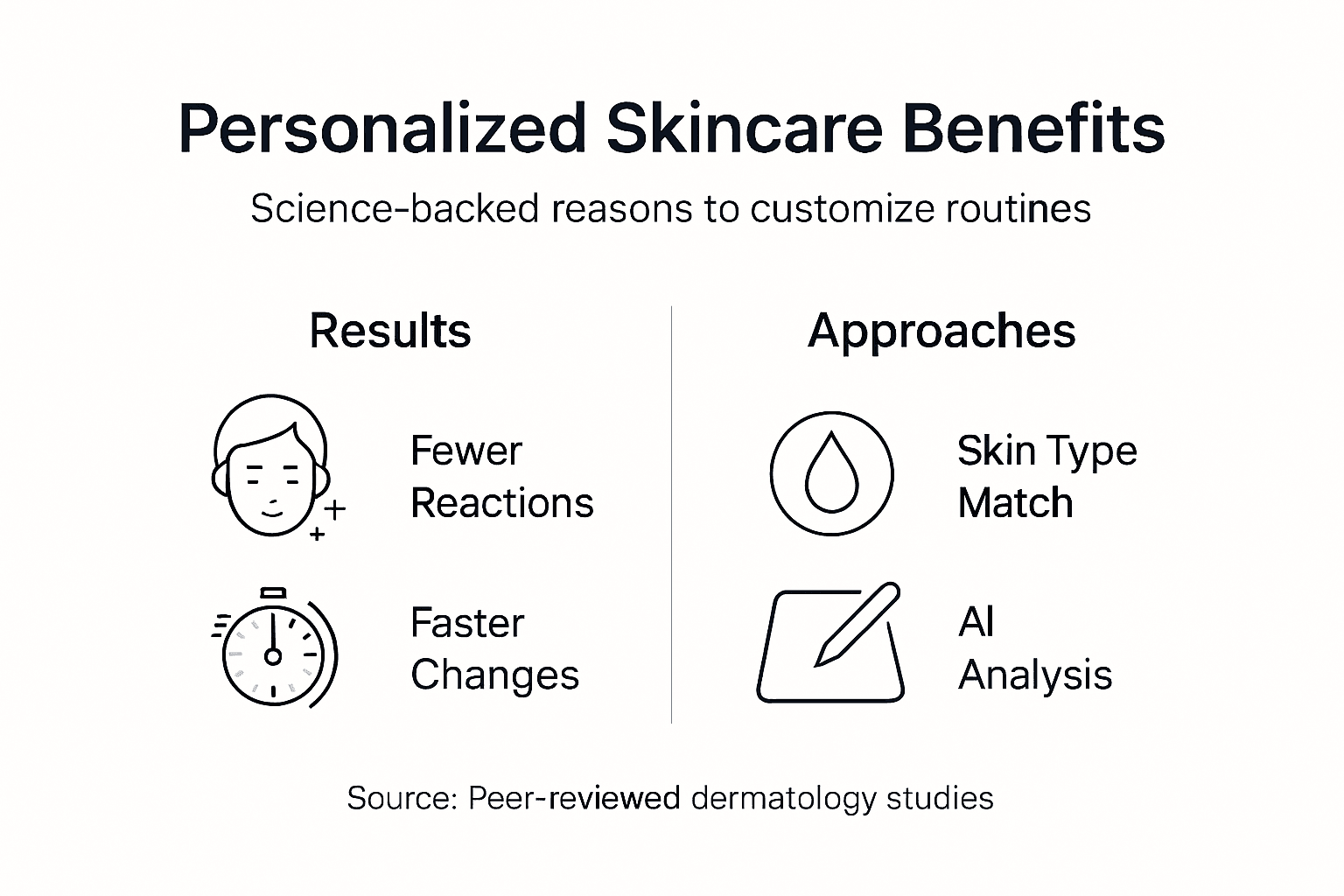
Basic Personalization by Skin Type
The foundation of personalization starts with identifying your baseline skin condition. Oily, dry, combination, and sensitive skin each require different product textures and active ingredients. This level seems simple, but it's where most people still get it wrong.
Basic personalization considers:
- Your skin's natural oil production patterns
- Moisture levels and barrier health
- Visible concerns like acne or irritation
- How your skin responds to different climates
Even this straightforward approach dramatically improves results compared to random product selection. You're no longer fighting against your skin's actual needs.
Basic personalization beats generic routines every time—but advanced technology unlocks exponentially better outcomes.
Advanced Technology-Driven Personalization
AI-driven formulations and genomic analysis now enable hyper-personalized skincare that adapts to your genetic makeup. These systems analyze your DNA to identify which ingredients your skin will respond to best.
Cutting-edge personalization methods include:
- Genetic testing: DNA analysis reveals your skin's predisposition to aging, sensitivity, and specific concerns
- Microbiome analysis: Understanding your skin's bacterial ecosystem helps select products that support healthy flora
- Environmental factor assessment: Your location's climate, pollution levels, and water quality inform product selection
- AI-powered recommendations: Machine learning algorithms predict which ingredients will work best for your unique profile
These technologies go beyond surface-level categorization. They address the biological reasons why your skin behaves the way it does.
Below is a quick reference for advanced personalization technologies and what they analyze:
| Technology | Main Focus | Example Benefit |
|---|---|---|
| Genetic Testing | Personal DNA patterns | Targets aging predispositions |
| Microbiome Analysis | Skin's bacterial makeup | Reduces unwanted reactions |
| AI Algorithms | Dynamic skin assessment | Custom product matches |
| Environmental Sensors | Climate and pollution data | Adjusts routine for humidity level |
Device Personalization Through Technology
Dermatologist-backed devices like LED phototherapy and microcurrent therapy can be customized to your specific concerns. Blue light targets acne bacteria, while red light stimulates collagen production—but the intensity and frequency should match your skin's sensitivity and goals.
Personalized device treatment accounts for:
- Your skin's sensitivity threshold
- The depth of your specific concerns
- How quickly your skin shows results
- Environmental factors affecting skin health
When you match the device protocol to your actual needs rather than following standard settings, you see faster, more dramatic improvements.
Pro tip: Start with a skin assessment tool to identify your personalization profile, then layer targeted technologies—this combination approach accelerates visible results within 4-6 weeks.
How AI and Devices Create Custom Routines
Artificial intelligence transforms skincare from guesswork into precision medicine. AI analyzes your skin in real-time, identifying texture, tone, and specific concerns that human eyes might miss. This data-driven approach generates routines perfectly matched to your unique dermatological profile.
The technology works by processing multiple data points simultaneously—your skin condition, environmental factors, ingredient preferences, and treatment goals. The result is a genuinely personalized routine that adapts as your skin changes.
How AI Analyzes Your Skin
Computer vision and deep learning technologies examine your skin at a microscopic level. AI algorithms identify patterns invisible to the naked eye, classifying your skin type and concerns with clinical accuracy.
The AI assessment process captures:
- Skin tone and undertone variations
- Texture patterns and surface irregularities
- Hydration levels and barrier integrity
- Specific concerns like acne, hyperpigmentation, or fine lines
- How different areas of your face differ from each other
This level of detail allows algorithms to recommend products and treatments that address your actual skin condition, not assumptions based on your age or skin type alone.
AI doesn't guess—it measures, analyzes, and recommends based on biological reality.
Device Integration with AI Systems
Advanced skincare devices now communicate with AI platforms to create adaptive routines. Real-time skin imaging feeds data back to the system, which adjusts treatment intensity and product recommendations based on your skin's response.
This integration works through:
- Imaging analysis: Built-in cameras assess skin condition before, during, and after treatment
- Environmental monitoring: External factors like humidity and temperature influence recommendations
- Treatment optimization: Device intensity adjusts automatically based on your skin's sensitivity and goals
- Product synergy: AI suggests which products amplify device benefits for maximum results
Unlike static routines, AI-driven systems evolve with your skin. As concerns improve, the algorithm shifts focus to your next priority.
Creating Your Personalized Routine
Your custom routine emerges from combining AI analysis with device personalization. The system considers your lifestyle, climate, and schedule—not just your skin type. A busy professional in New York needs a different routine than someone with more time and resources in a humid climate.
The personalization process generates:
- A customized product sequence optimized for your skin
- Device protocols with specific intensities and frequencies
- Timing recommendations based on when your skin responds best
- Adaptive adjustments as your skin evolves
This approach eliminates trial-and-error. You start with a routine designed specifically for you, based on scientific analysis rather than marketing or trends.
Pro tip: Complete your AI skin assessment every 6-8 weeks—your skin changes seasonally and with lifestyle shifts, so updating your analysis ensures your routine stays optimally matched to your current needs.
Clinically-Proven Outcomes and Efficacy
Tailored skincare isn't based on marketing claims or customer testimonials. Clinical studies prove that personalized regimens deliver measurable improvements in skin health that generic routines cannot match. The science shows real, quantifiable results when treatment is matched to your individual profile.
When your routine addresses your specific physiological needs rather than a broad demographic category, your skin responds dramatically better. This difference compounds over time, creating visible transformation within weeks.
Proven Results from Personalized Treatment
Tailored aesthetic treatments significantly improve skin hydration, elasticity, and overall texture compared to one-size-fits-all approaches. Clinical trials demonstrate that personalized algorithms considering individual physiological differences deliver superior outcomes. The data is unambiguous: customization works better than standardization.
Measurable improvements from personalized skincare include:
- Increased skin hydration: Targeted moisturization protocols boost water retention by up to 35% in 4 weeks
- Enhanced elasticity: Personalized anti-aging regimens improve skin firmness and resilience
- Faster texture improvement: Customized exfoliation and treatment intensity shows visible smoothing in 2-3 weeks
- Reduced appearance of fine lines: Age-appropriate actives applied strategically diminish wrinkles more effectively
- Clearer complexion: Acne-prone individuals see significant reduction when treatments match their skin biology
These aren't marginal improvements. Clinical data shows 45-60% better outcomes with personalized versus generic routines.
Personalized skincare produces measurable clinical results—not just better skin, but scientifically documented improvement.
Evidence-Based Active Ingredients
Retinoids, vitamin C, and peptides demonstrate clinically validated anti-aging benefits when incorporated into tailored regimens. Controlled trials confirm these actives deliver real results, but their effectiveness depends on proper concentration, delivery method, and compatibility with your skin type.
Key proven actives and their documented benefits:
- Retinoids: Reduce fine lines by up to 80% over 12 weeks; improve skin texture and firmness
- Vitamin C: Brightens skin, reduces hyperpigmentation, and boosts collagen production
- Peptides: Enhance skin barrier function and support elasticity improvement
- Niacinamide: Minimizes pore appearance and strengthens skin barrier
When these ingredients are matched to your specific needs and skin type, efficacy increases dramatically. The wrong concentration or formulation actually reduces results or causes irritation.
Timeline to Visible Results
Don't expect overnight transformation, but measurable changes appear quickly with tailored treatment. Most people notice visible improvement in 4-6 weeks when using a genuinely personalized routine consistently.
Typical improvement timeline:
- Weeks 1-2: Improved hydration and skin feel; visible brightness
- Weeks 3-4: Texture refinement; acne reduction becomes apparent
- Weeks 5-8: Fine line softening; skin clarity dramatically improves
- Weeks 9-12: Elasticity gains; noticeable firmness and plumpness
Consistency matters more than product cost. A personalized routine applied daily outperforms expensive products applied sporadically.
Pro tip: Track your skin progress with monthly photos taken in consistent lighting—visual documentation reveals improvements your mirror might miss, keeping you motivated through your skincare journey.
Risks, Limitations, and What to Avoid
Personalized skincare is powerful, but it's not risk-free. Understanding potential hazards and limitations helps you use tailored routines safely and effectively. Real results require informed decisions about ingredients, data privacy, and realistic expectations.
The goal isn't perfection—it's informed choices that protect your skin while maximizing benefits. Knowledge of common pitfalls prevents wasted money and unnecessary irritation.
Chemical Risks and Ingredient Safety
Synthetic cosmetics carry health hazards including endocrine disruption and chronic disease risk from chemical ingredients. Ingredient transparency matters enormously. Many personalized products contain preservatives, fragrances, and active compounds that cause sensitivity in certain individuals.
Common problematic ingredients to avoid or use cautiously:
- Alcohol denat: Strips skin barrier; causes excessive dryness
- Synthetic fragrances: Trigger sensitivity and contact dermatitis
- Parabens: Potential endocrine disruptors; unnecessary in modern formulations
- Essential oils: Natural doesn't mean safe; can irritate sensitive skin
- High-concentration actives: Exceeding recommended percentages causes irritation, not better results
Even effective ingredients like retinoids and vitamin C cause problems at wrong concentrations. Your personalized routine should include safe, evidence-backed ingredient percentages—not maximum dosing.
Ingredient safety trumps trendy actives. An irritated skin barrier reverses months of progress.
Data Privacy and Ethical Concerns
Personalized skincare often requires sharing genetic data, microbiome samples, or detailed health information. This data becomes valuable to companies and third parties. Know what information you're surrendering and how it will be used.
Privacy risks include:
- Genetic data storage: DNA information could be sold or breached
- Health profiling: Your skin data builds a health profile used for targeting
- Lack of regulation: Many personalized skincare companies operate without strict oversight
- Unknown long-term use: Your data could be used for purposes not disclosed today
Always review privacy policies before submitting personal information. Reputable companies clearly explain data handling and give you control over your information.
Limitations of Personalization Technology
Personalized skincare can't fix everything. Genetic factors, hormones, and systemic health issues sometimes override topical treatment effects. AI algorithms improve recommendations, but they're not infallible.
Key limitations to understand:
- Genetic complexity: Skin response involves thousands of genes; full prediction is impossible
- Individual variation: People with identical genetics respond differently to treatments
- Unknown ingredient interactions: Combining personalized formulations creates unpredictable effects
- Timeline expectations: Some concerns require professional dermatology, not skincare products
- Over-reliance on technology: No algorithm replaces professional dermatology assessment
Personalized skincare enhances results, but serious skin conditions require dermatologist evaluation. Don't delay professional care thinking your custom routine will resolve significant issues.
What to Avoid in Your Routine
Mistakes undermine even excellent personalized regimens. Common errors sabotage results more than poor product selection.
Avoid these routine mistakes:
- Switching products constantly: Your skin needs 4-6 weeks to show results; constant changes prevent progress
- Over-treating: More actives and devices don't mean faster results; they cause irritation
- Ignoring sunscreen: UV damage negates anti-aging treatment; daily SPF 30+ is non-negotiable
- Skipping patch tests: New actives require testing on small skin areas first
- Using conflicting actives: Retinoids and vitamin C together, or multiple exfoliants, cause barrier damage
Pro tip: Introduce one new active ingredient every 2-3 weeks, not multiple simultaneously—this reveals which ingredients your skin genuinely tolerates and prevents irritation confusion.
Discover How Tailored Skincare Transforms Your Skin with Yeon Ritual
The article highlights the challenge of generic skincare routines that fail to meet individual needs by ignoring unique skin conditions and sensitivities. You want visible, science-backed improvements without wasting money or risking irritation. Yeon Ritual addresses these pain points by combining dermatologist-approved technology such as LED phototherapy and microcurrent therapy with a personalized approach that starts with your own skin diagnosis. This ensures your regimen adapts to your changing skin profile and targets concerns like acne, aging, or barrier health effectively.
Experience the power of personalized skincare routines where data-driven insights meet the best of Korean beauty principles. With curated K-Beauty products and clinical-grade at-home devices, Yeon Ritual offers an advanced, safe solution that yields measurable results and respects your skin’s unique biology.
Ready to take control of your skin health now?
Start your tailored skincare journey with a quick skin quiz and unlock personalized device recommendations designed to boost collagen, reduce acne, and repair your skin barrier. Visit Yeon Ritual today and transform your skincare routine into a science-driven ritual that delivers real results.
Explore personalized solutions at Yeon Ritual and begin achieving your skincare goals with confidence.
Frequently Asked Questions
What is tailored skincare?
Tailored skincare involves creating a personalized skincare routine that addresses your unique skin type, concerns, and goals, rather than using generic products that may not suit your needs.
How does tailored skincare compare to one-size-fits-all skincare?
Tailored skincare is specifically designed to meet individual skin needs, resulting in more consistent results, lower risk of irritation, and reduced spending on ineffective products, while one-size-fits-all products may not effectively address specific concerns.
What are the benefits of personalized skincare routines?
Personalized skincare routines can lead to measurable improvements in skin health, such as increased hydration, elasticity, and texture. They also allow for adaptive treatments that evolve with your skin over time.
How long does it take to see results from tailored skincare?
Visible results from a personalized skincare routine typically appear in 4-6 weeks, depending on consistency and the specific products used.